| 9:05 AM |
| Shekhar Borkar Jaijaiwanti s/r Shekhar Borkar conceptualized the "Surtarang" a combination of the vichitra veena and sarod. This is very similar to the "Mohan Veena" developed by Radhika Mohan Maitra in 1948. 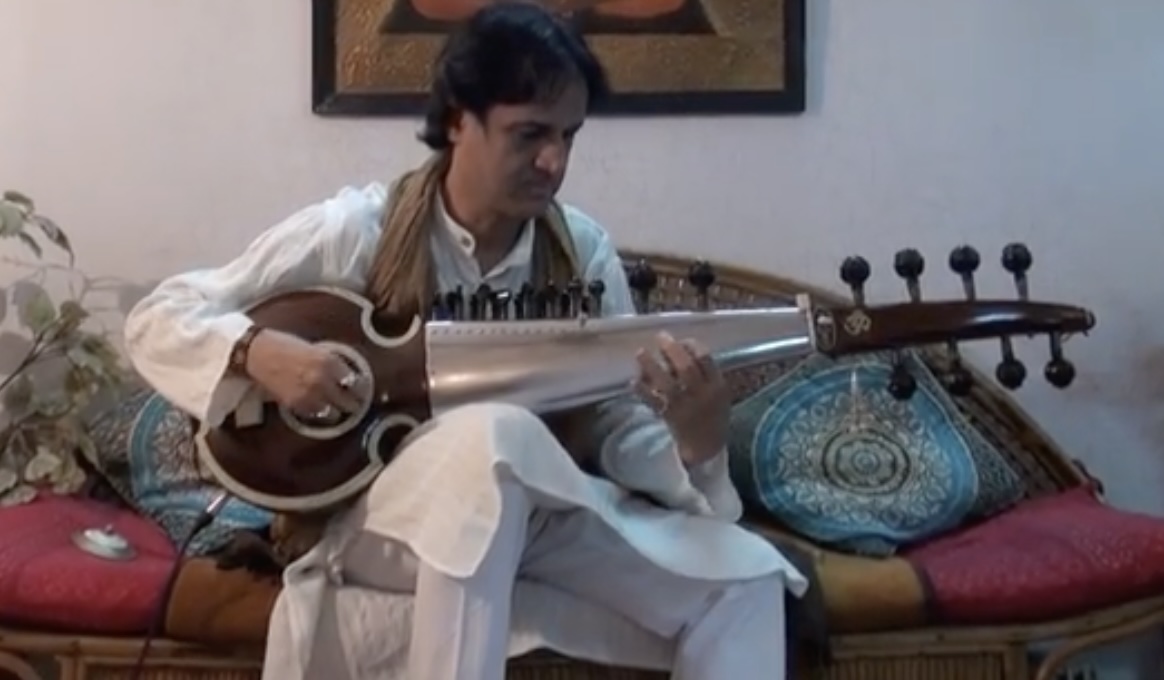
|
| 9:17 AM |
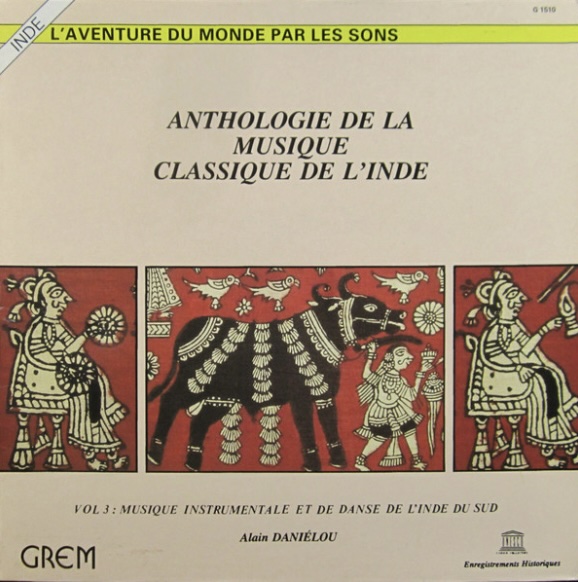
| Budalur Krishnamurti Shastri "Ganesha Kumara" - Chinjuruti Dikshitar Anthologie De La Musique Classique De L’Inde Vol. 3 GREM 1986 The "Gottuvadyam" is a fretless slide instrument of South India, and is nearly extinct. Budaloor Krishnamurti Shastri (1894–1978) contributed to the popularity of his instrument and is considered an inspiration for Chitravina Narasimhan and his son, N. Ravikiran, who champions the instrument currently. This recording dates back to the early 1950s. 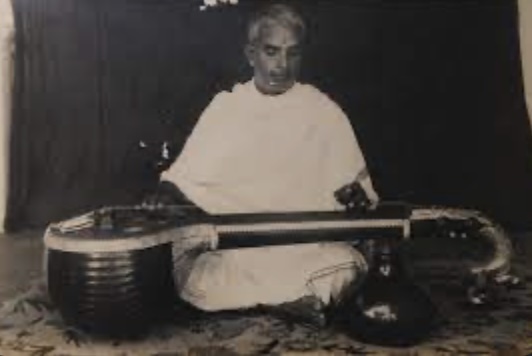
|
| 9:23 AM |
| Anshdeep Singh Bhairavi s/r The taus, originally known as the mayuri veena, is a bowed string instrument from North India, a form of veena with a peacock-shaped resonator called a mayuri (peacock) and is played by bowing the neck of the instrument. It later evolved into the "dilruba". 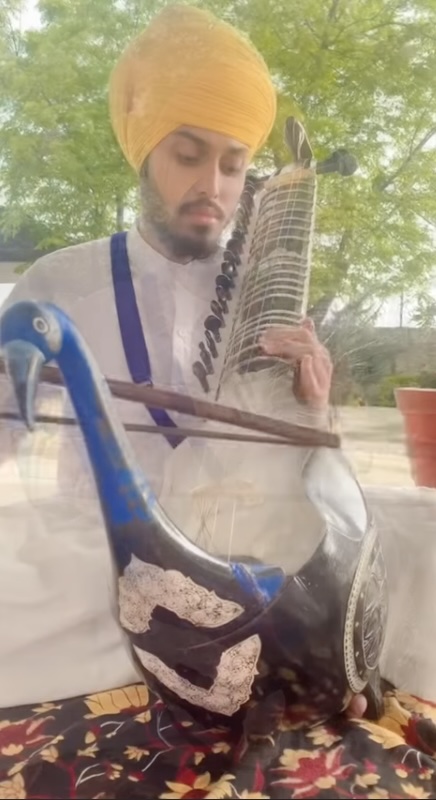
|
| 9:25 AM |
| Takashi Kougo Raga Kedar s/r The "esraj" is sort of like a bowed sitar, but the soundboard is stretched goatskin like a sarangi. Takashi Kougo learnt from esraj player Ranadir Roy. 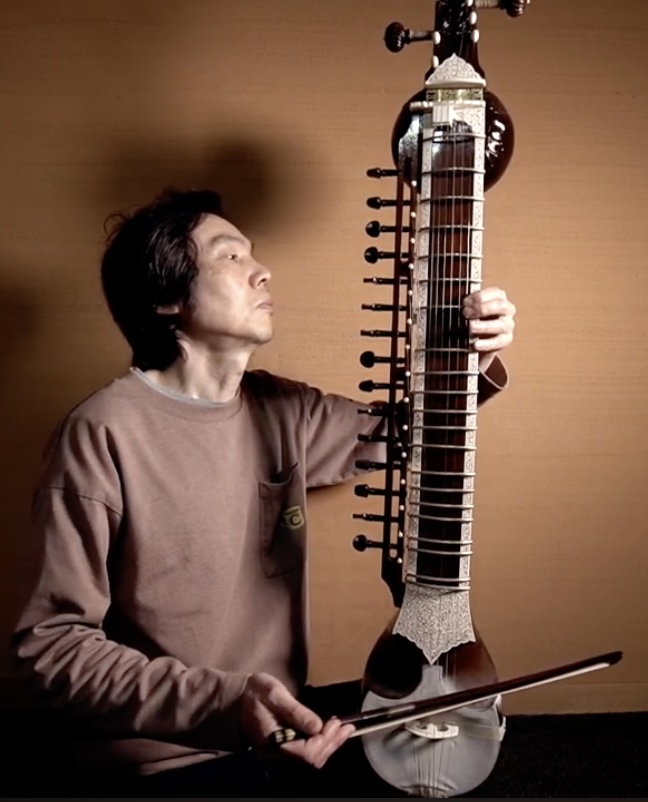
A similar instrument is the "dilruba", slightly larger than an esraj and has a larger, square resonance box. (It is the dilruba that was heard on the Beatles' 'Within You Without You'.) |
| 9:31 AM |
| Pandit Kamalesh Maitra Basant Mukhari The Voice of Sarod From The Strokes of Drums EMI 1994 Kamalesh Maitra (28 April 1928 – 22 April 2005), was an Indian classical musician, composer and teacher. He is recognised as the last master of the tabla tarang, a melodic percussion instrument consisting of between ten and sixteen tuned 'dayan' drums. In a tabla "pair" instrument, the dayan is the treble drum and the bayan is the bass drum. Tarang means "waves". 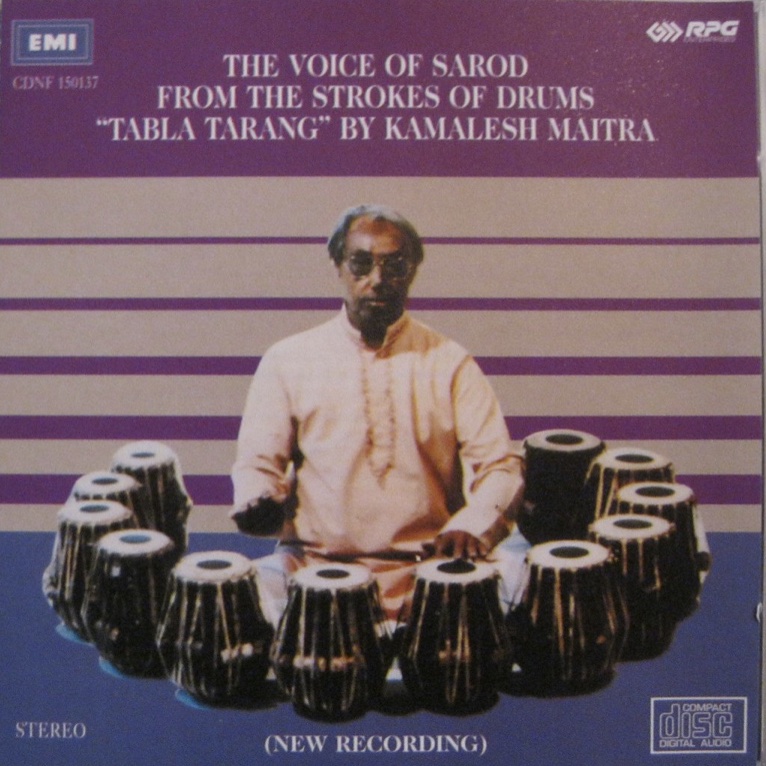
|
| 9:39 AM |
| Sidhram Jadhav Khamaj Thumri Sundri Recital Odeon 1968 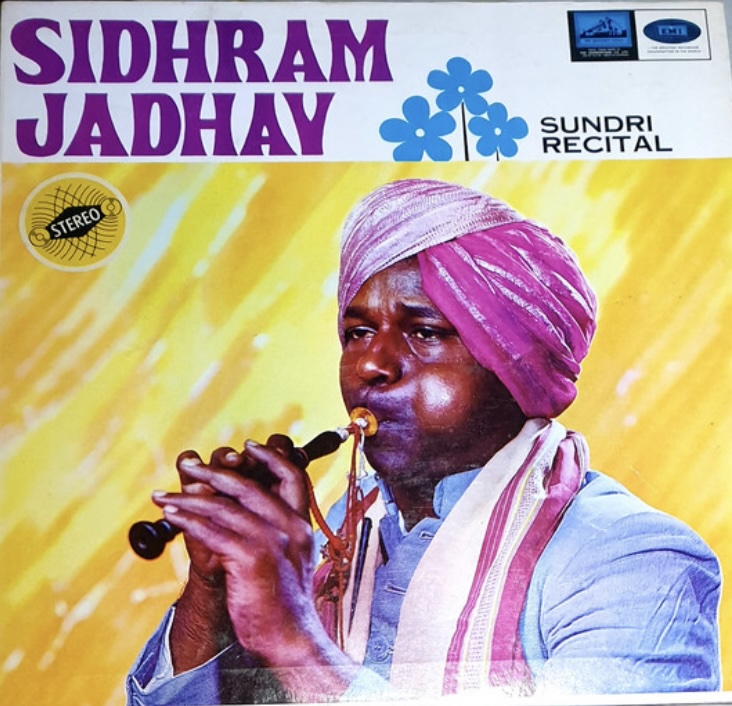 The sundari or sundri is a double reed wind instrument, similar to a shehnai, but smaller, and suited for fast tempo folk music. |
| 9:46 AM |
| K. Siva Prasad Magudi Whistle Sangeetha Koel 1985 Studying under Dr. M. Balamuralikrishna, and flautist N. S. Srinivasan, K. Siva Prasad chose to whistle Carnatic kritis. 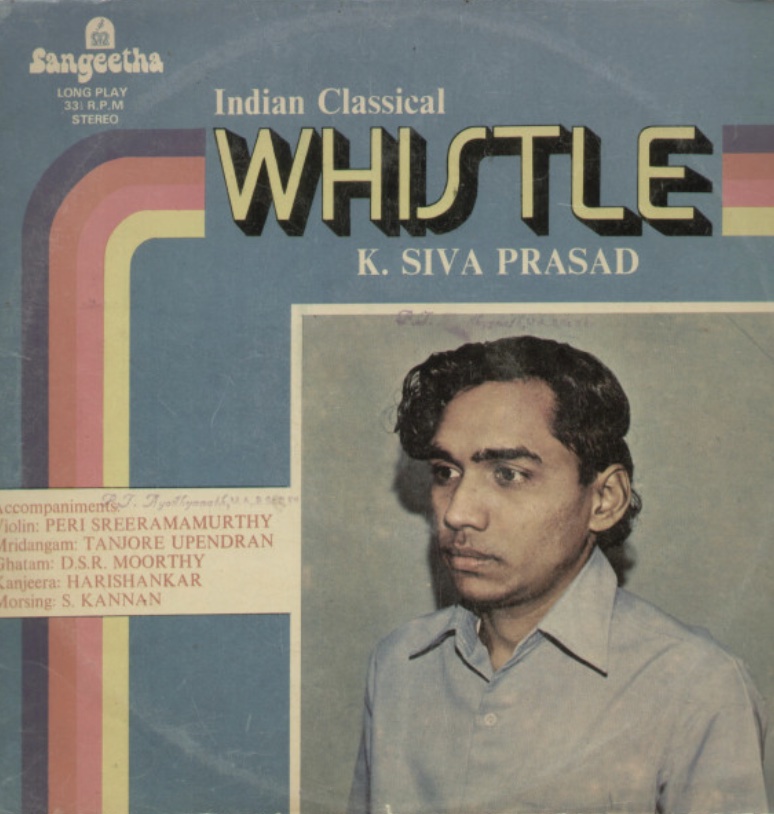
|
| 9:53 AM |
| Chintamani Jain Bhupali Classical Music Of India Nonesuch Explorer Series The jal tarang is a melodic percussion instrument that originates from the Indian subcontinent. It consists of a set of ceramic or metal bowls filled with water. The bowls are played by striking the edge with beaters, one in each hand. 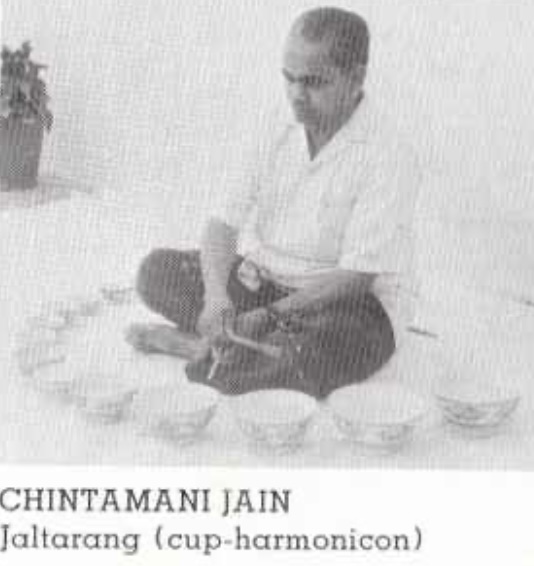
|
| 9:59 AM |
| Anayampattti S. Ganesan Theliyaleru Rama - Dhenuka Tyagaraja Water Music of South India Vol. 2 Koel Music 1999 Jal tarang means "waves in water". Water is poured into the bowls, and the pitch is changed by adjusting the volume of water. The player softly hits the edge of the bowls with 2 wooden sticks. It is found in both Hindustani and Carnatic music. Anayampatti S. Ganesan was born in Chennai in 1932. His jalatharangam is a set of 19 antique porcelain bowls from China that are 100 years old. 

|
| 10:08 AM |
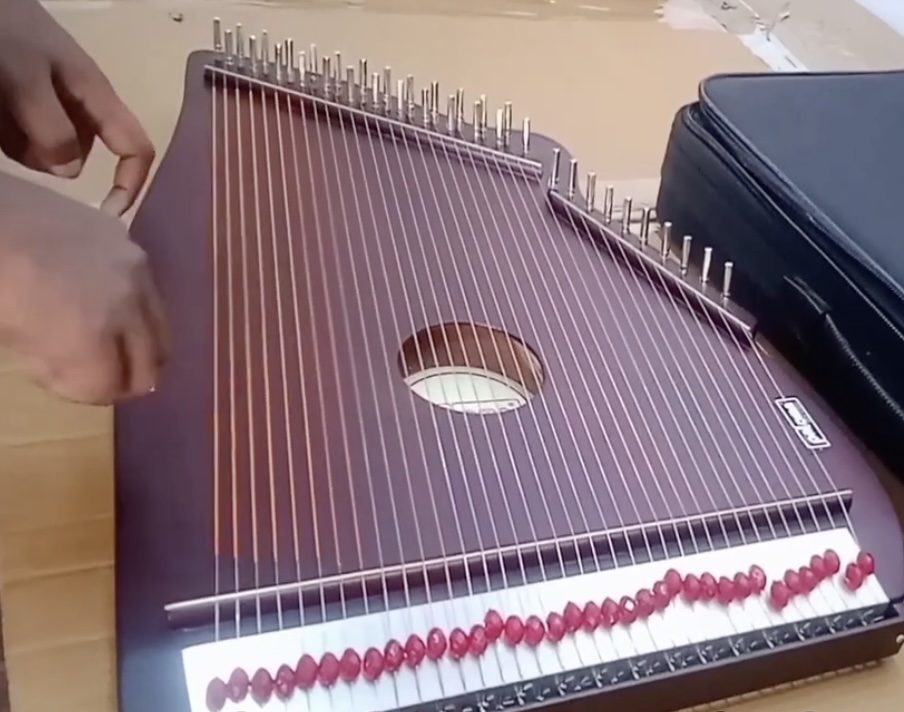
| D. R. Parvatikar Brindavani-Tilang Anthologie De La Musique Classique De L’Inde, Vol. 1 GREM 1985 The "Swara Mandala" is basically a box zither, but it has been in the Indian subcontinent for centuries, usually just strummed by vocalists. It is heard here played by Swami Dattatreya Rama Rao Parvatikar [1916-1990], known mostly as a rudra vina player and sanyasi (monk). 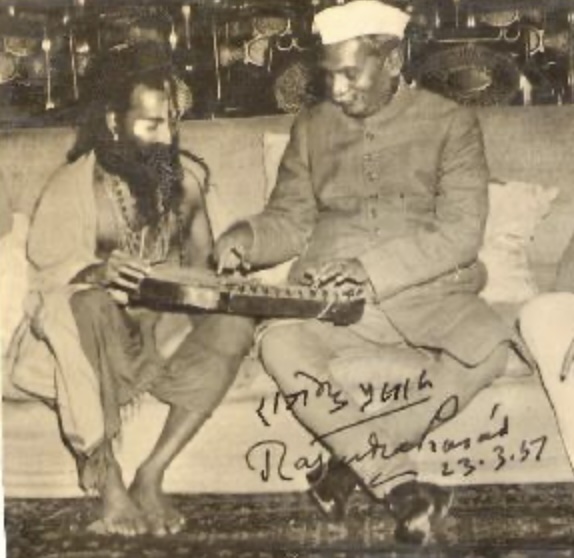
|
| 10:14 AM |
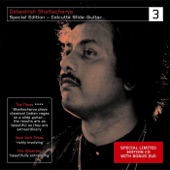
| Debashish Bhattacharya Prema Chakor Calcutta Slide-Guitar World Music 2005 Debashish Bhattacharya was born into a musical family in Kolkata on 12 January 1963. 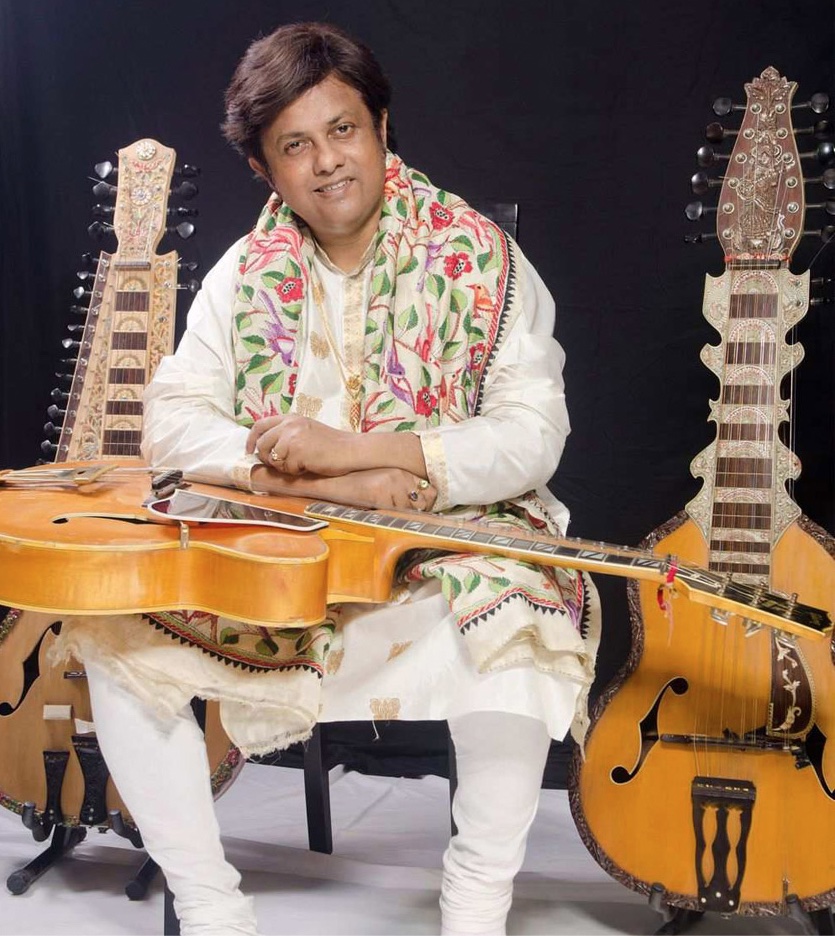
He designs his own instruments. The bodies are that of a guitar, but the rest is all his. |
| 10:24 AM |
| Prasanna Karimuga Varada - Nattai G. N. Balasubramaniam Natabhairavi INRECO 2000 R. Prasanna (better known as Guitar Prasanna), was born on 2 October 1970, and grew up in Chennai. He is a pioneer in performing Carnatic music on the electric guitar. He also plays jazz, progressive rock, and world fusion. 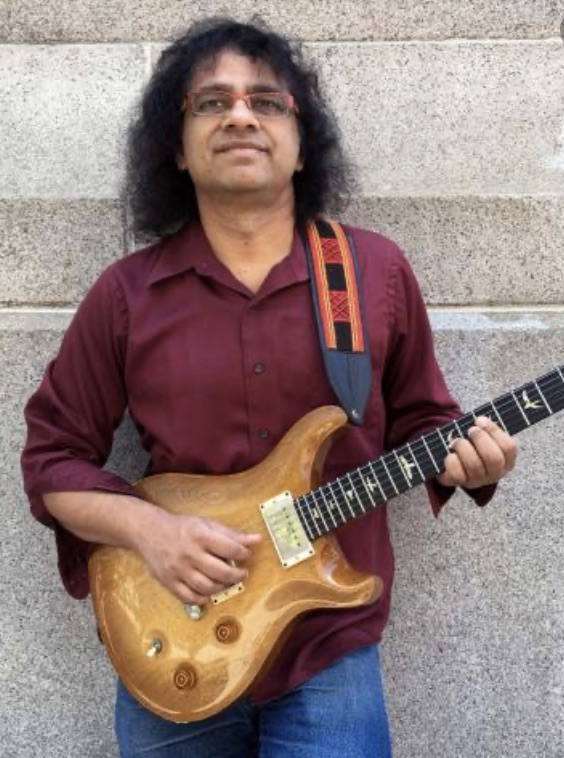

|
| 10:33 AM |
| Dr. M. Lalitha & M. Nandini Siva Siva Siva - Karaharapriya V. Lakshminarayana Iyer Saivam - Kritis on Lord Shiva Santhananda Soundscapes 2007 Dr. M. Lalitha and M. Nandini play electric violins. They are nieces of L. Shankar and L. Subramaniam. 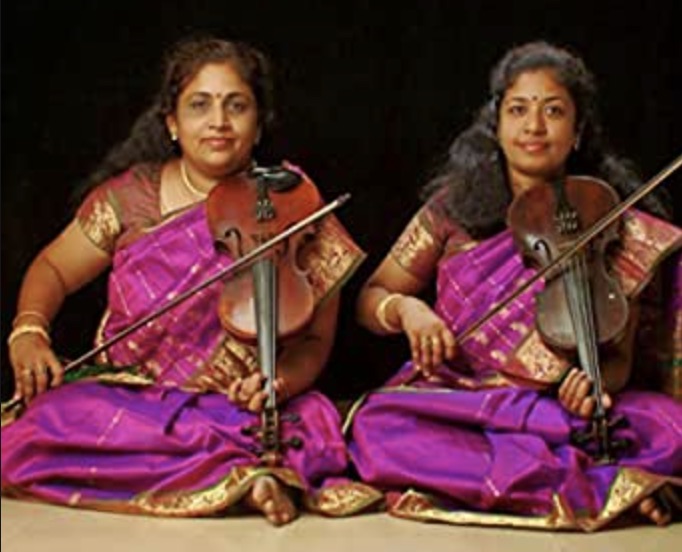
|
| 10:39 AM |
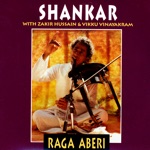
| L. Shankar Raga Aberi Tracks 2 & 3 Raga Aberi Music Of The World 2007 Born in Madras on 26 April 1950, he is the son of violinist V. Lakshminarayana, and brother of L. Subramaniam and L. Vaidyanathan. While attending college at Wesleyan University, he met jazz musicians like Ornette Coleman, Jimmy Garrison, and John McLaughlin. With McLaughlin, Shankar founded the group Shakti in 1975, one of the early groups in which Eastern and Western musical traditions met. Shankar designed this custom double-neck electric violin around 1980, which soon found its way onto numerous crossover collaborations. 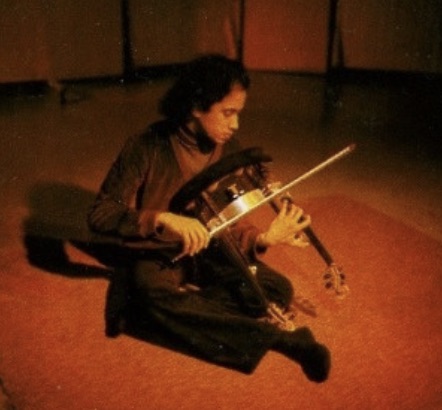
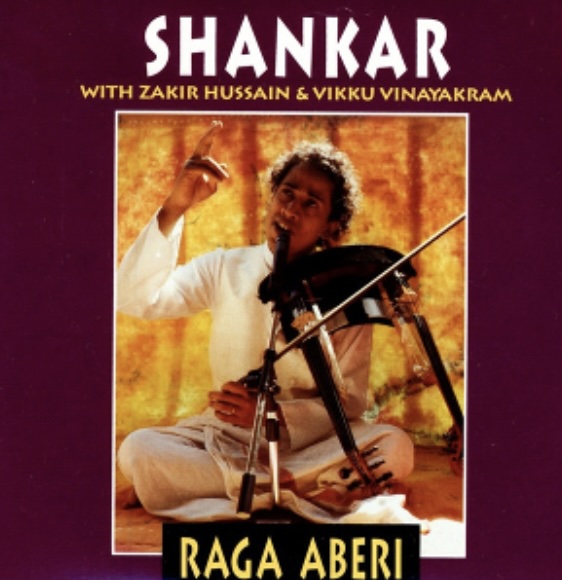
Due to time constraints, we are only hearing a small portion of the performance. |
| 10:48 AM |
| Nasir Sajjad Hussain Puriya Dhanashri The mandolin is another recent import into ICM. Mandolin music was used in Indian movies as far back as the 1940s, prominently by Nasir Sajjad Hussain (1917 – 1995), who also performed classical music on acoustic mandolin. 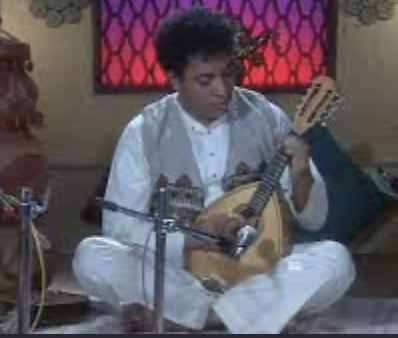
|
| 10:58 AM |
| U. Srinivas Marugelara - Jayanthashree Mandolin Ecstasy U. Srinivas (28 February 1969 - 19 September 2014) was a child prodigy. He was the first musician to use the electric mandolin in Carnatic music. He modified the electric western instrument, using five single strings instead of the traditional four doubled strings to suit the Carnatic pitch, raga system, and especially "gamakas", or nuanced oscillations. He developing a phenomenal style of playing entirely his own, and astonishingly, on an instrument that had never been played in the rigorous and difficult Carnatic style before. 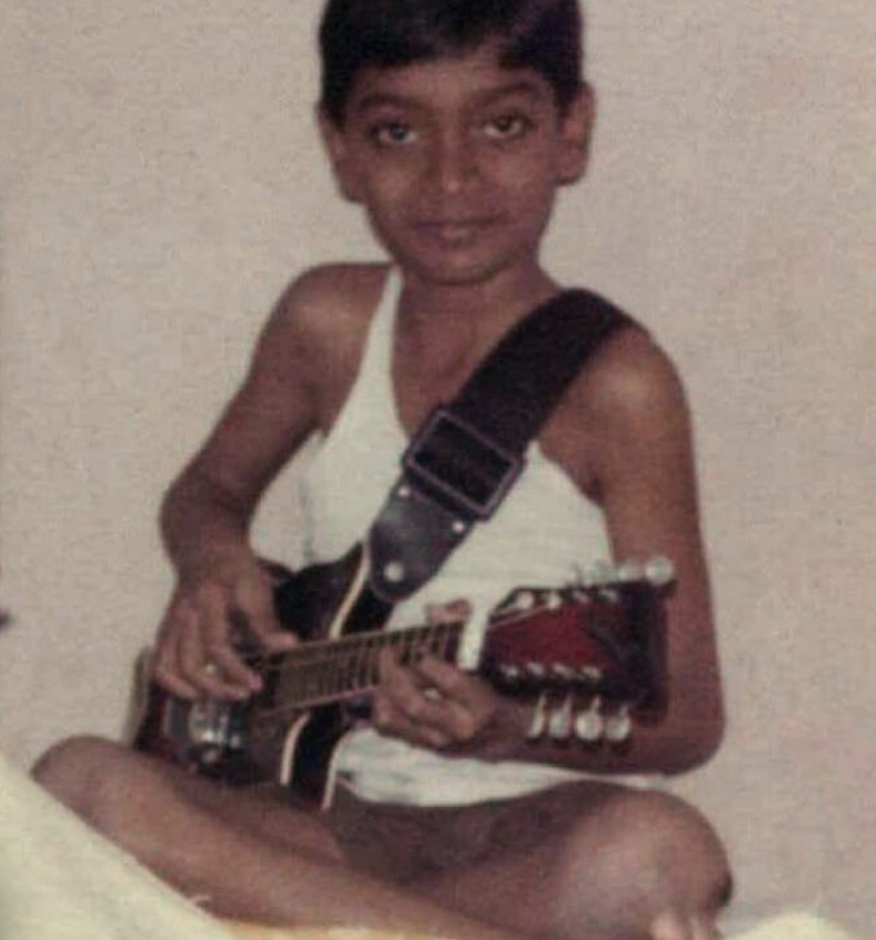
|
| 11:04 AM |
| Jnan Prakash Ghosh & V. Balsara Misra Piloo Raga on Keyboard EMI 1978 Keyboards are another import to the Indian subcontinent. The harmonium arrived in India during the mid-19th century, possibly with missionaries or traders. The harmonium quickly became popular, being portable, reliable and easy to learn. The harmonium has almost completely replaced the sarangi as an accompaniment to Hindustani vocalists, even though it isn’t really well suited for Indian Classical Music. We'll hear a duet featuring harmonium by Jnan Prakash Ghosh (usually a percussionist), and Vistas Ardeshir Balsara on the piano. 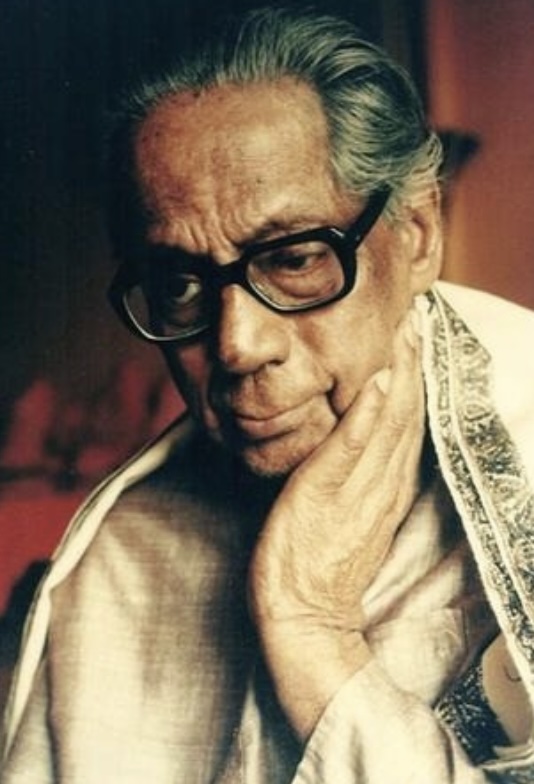 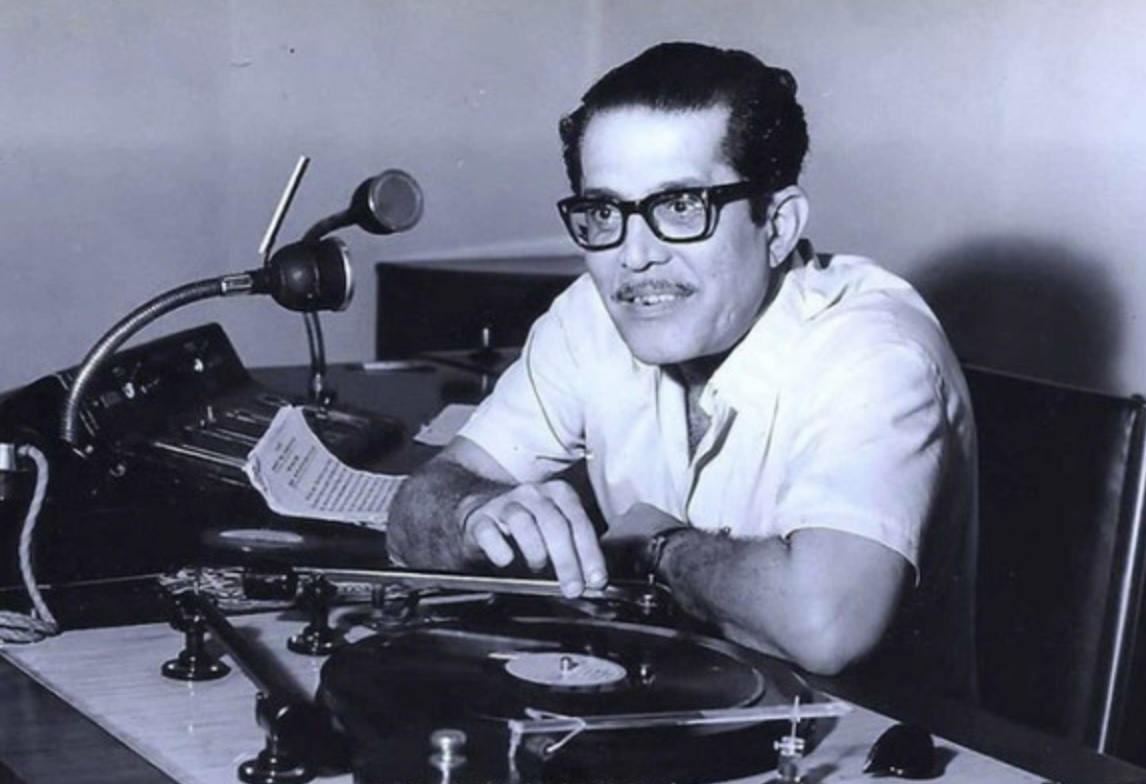
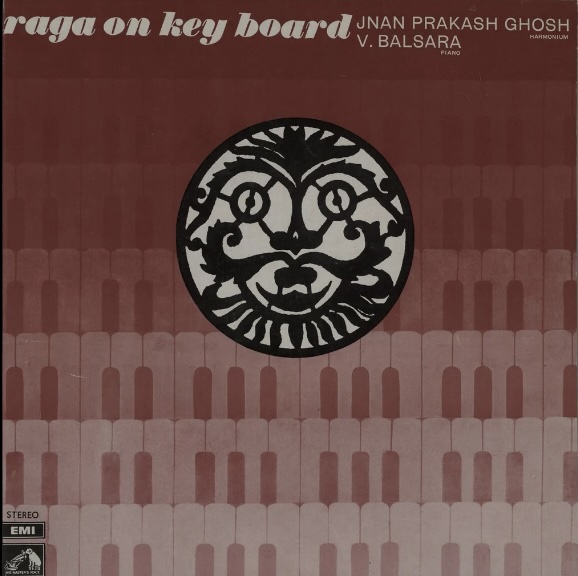
|
| 11:12 AM |
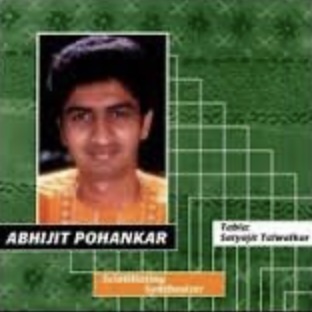
| Abhijit Pohankar Pahadi Dhun Scintillating Synthesizer Neelam 1999 Abhijit Pohankar (born 29 June 1975, in Mumbai) plays Indian classical music on electronic keyboard. 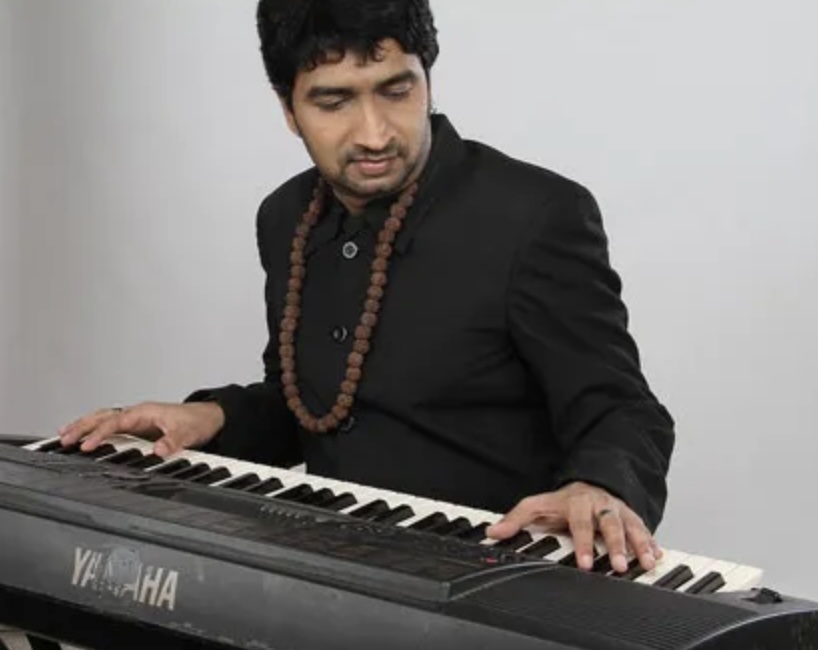
|
| 11:19 AM |
| Kadri Gopalnath Krishna Nee - Yaman Kalyan Vyasaraya Saxophone Indian Style Oriental Records 1986 Kadri Gopalnath (6 December 1949 – 11 October 2019) pioneered the saxophone in Indian Classical Music. 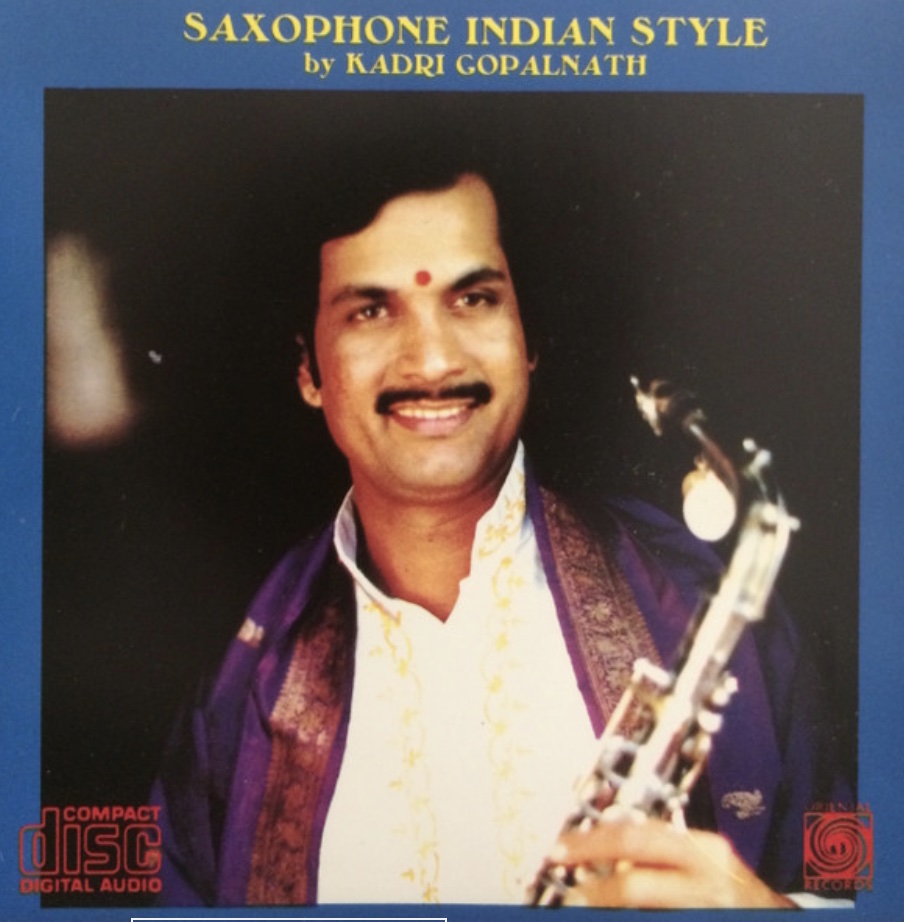
|
| 11:24 AM |
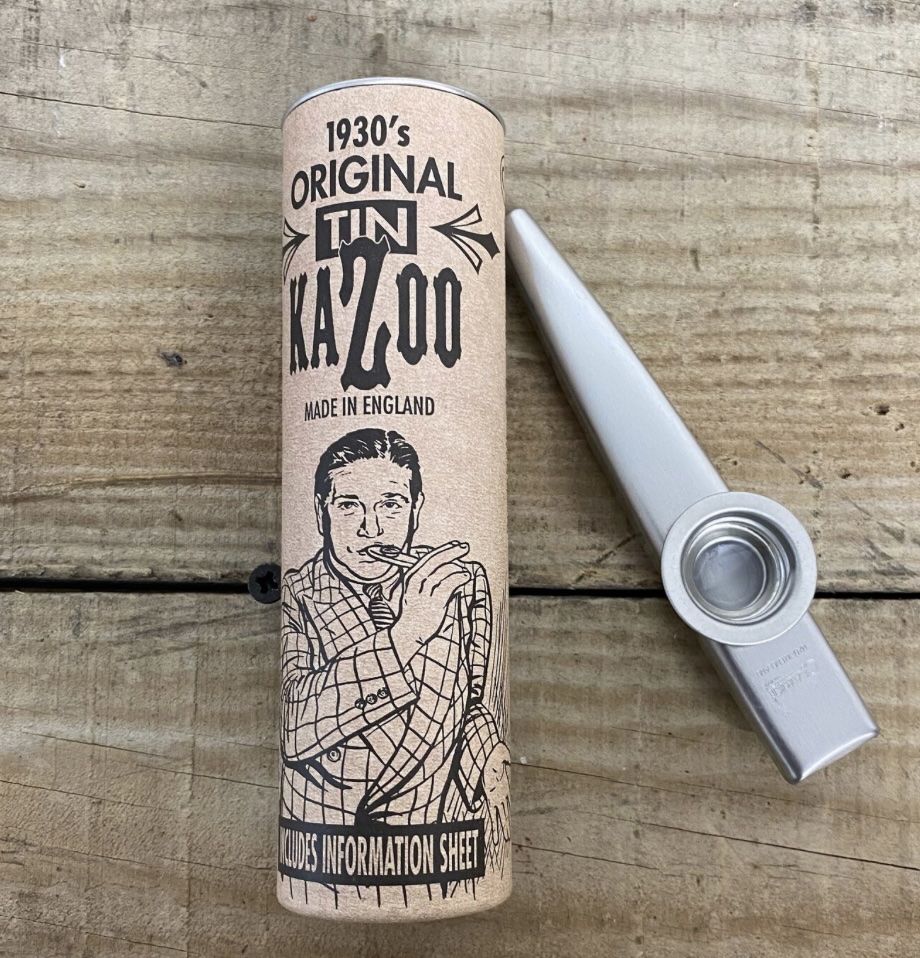
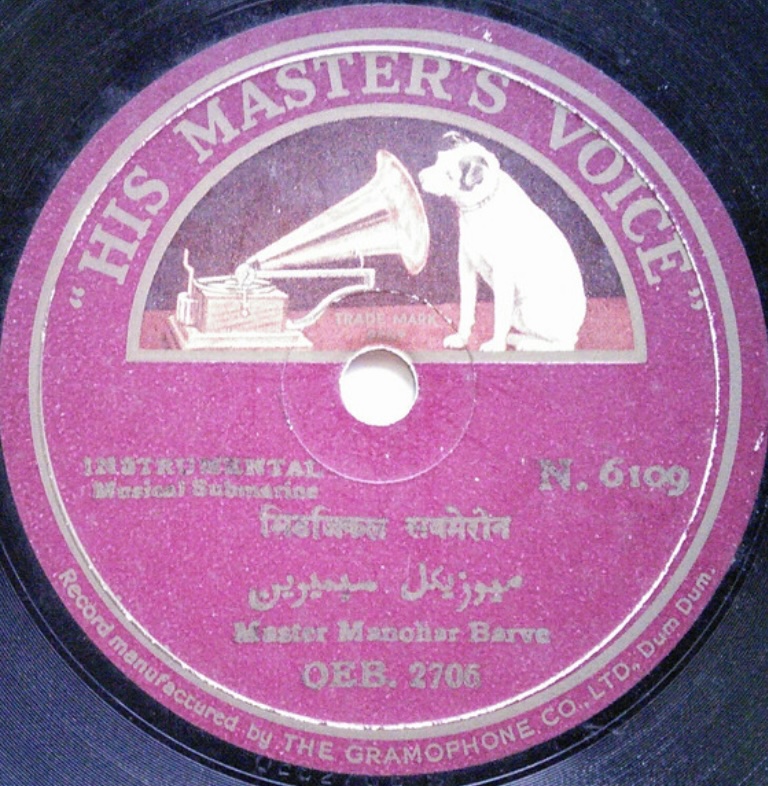
| Master Manohar Barve Darbari Indian Talking Machine Divine Frequencies 1932 Manohar Barve was an instrumentalist and singer in the Gwalior Gharana. This recording, issued on a 78 rpm disc by HMV circa 1932, uses what was called a "musical submarine", known nowadays as a "kazoo". Simple membrane instruments played by vocalizing, such as the onion flute, have existed since at least the 16th century. 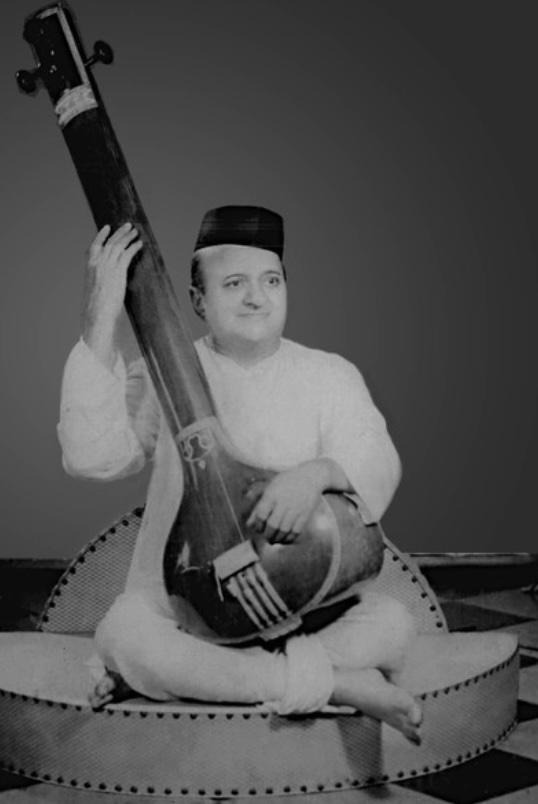
|
| 11:29 AM |
| Pawan Dhanak Bairagi s/r Pawan Dhanak plays the clarinet, a single reed woodwind instrument. 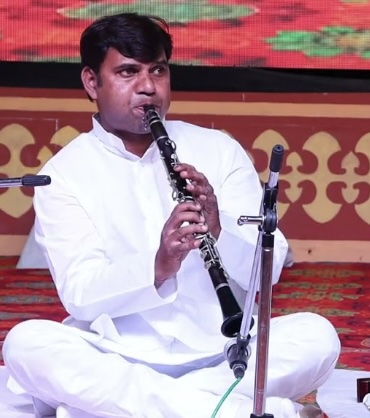
|
| 11:35 AM |
| Vaikom Vijayalakshmi Sankara Nadasreera Para - Shankarabharanam s/r Vaikom Vijayalakshmi (born 7 October 1981) is an Indian playback singer from Kerala. She is an expert in a rare musical instrument called Gayatriveena, a single string electric slide instrument. 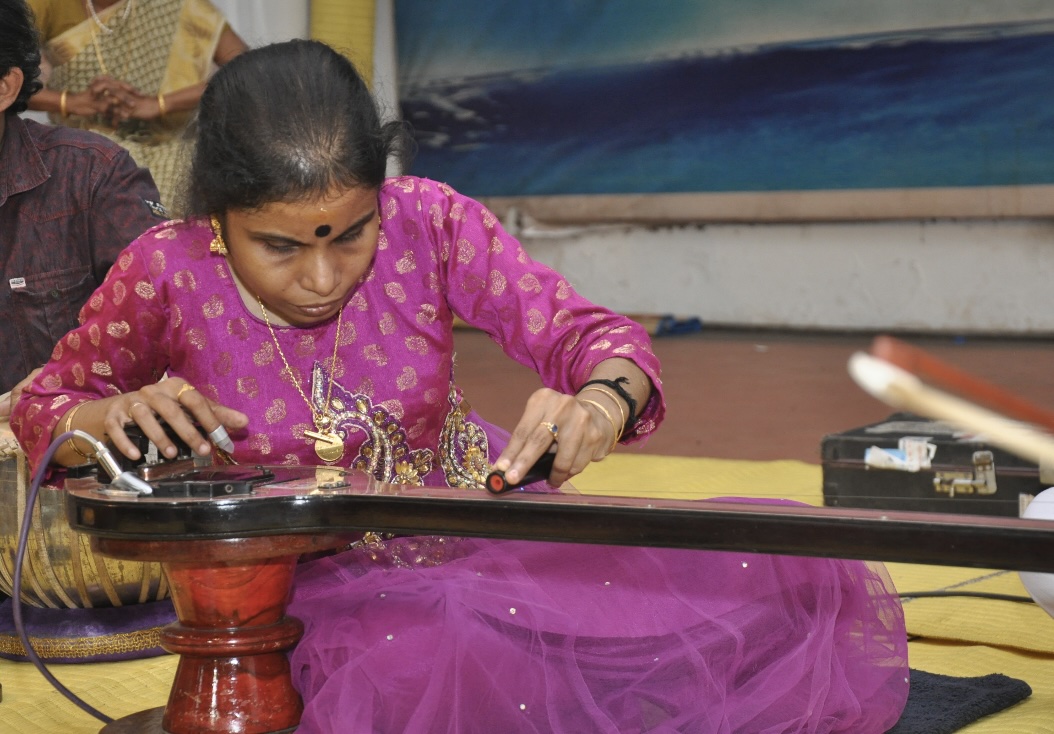
|
| 11:41 AM |
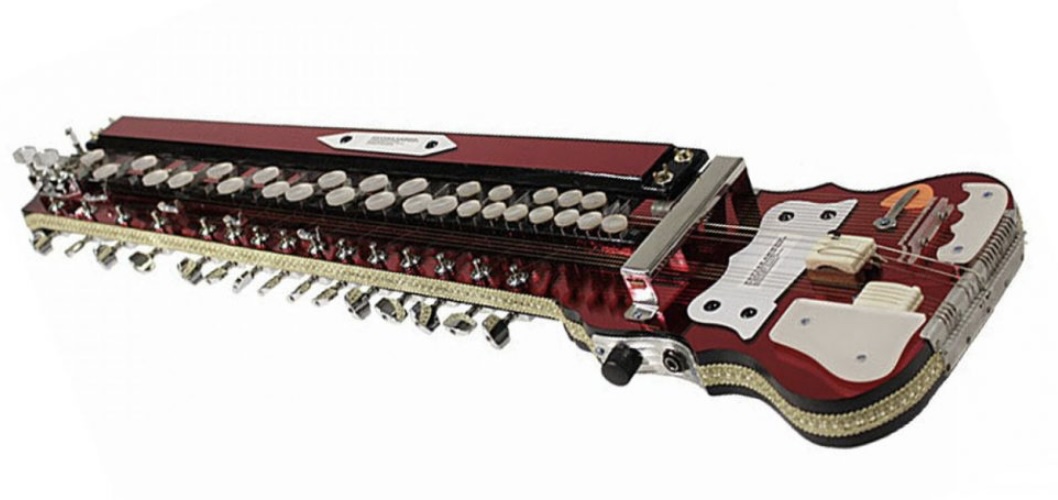
| Shafeeque Sheikh film song s/r Shafeeque Sheikh playing a "bulbul tarang", a keyed electric string instrument, literally “waves of nightingales”, evolved from the Japanese taishogoto, which arrived in the subcontinent in the 1930s. Similar to an autoharp. With typewriter keys. 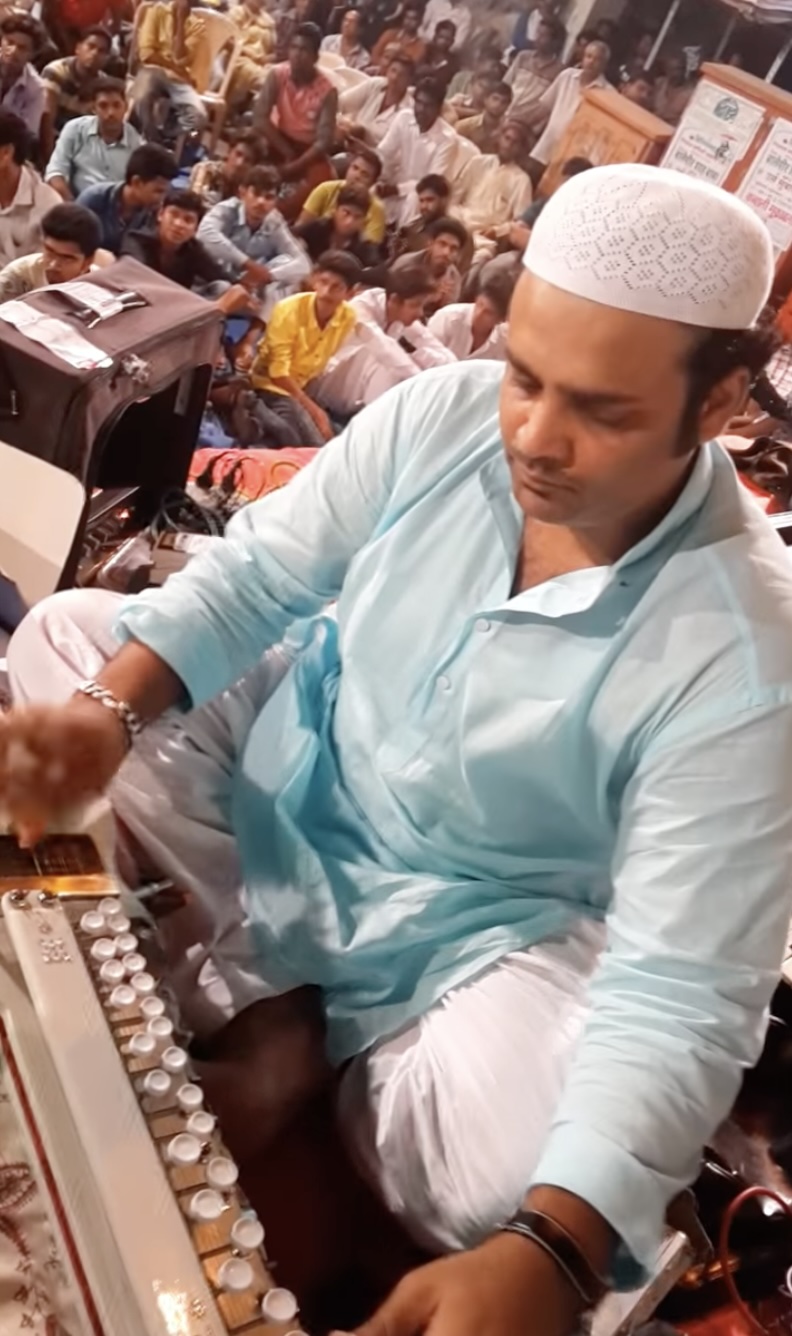
|
| 11:44 AM |
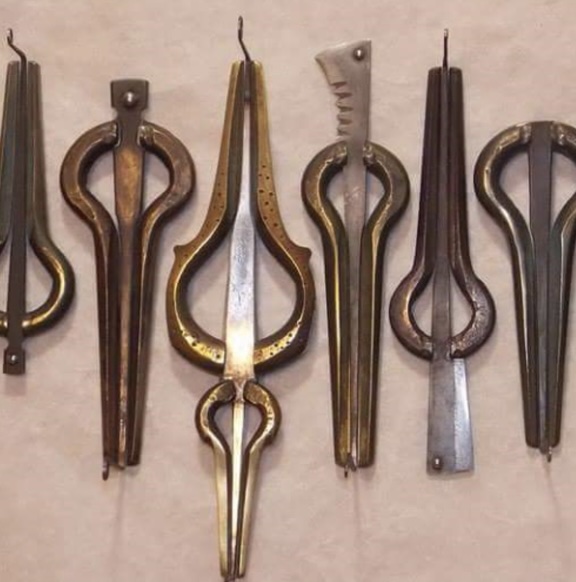
| L. Bhimachar & family morsing tarang A "morsing tarang" by L. Bhimachar and family. The Morsing / Jew’s harp is really global, dating back to at least 3rd century BCE in China. It is cheap, rugged, and transportable, so it spread all over the world. It can be heard in Carnatic music as percussion accompaniment, and as the "morchang" in Rajasthani folk music in North India. 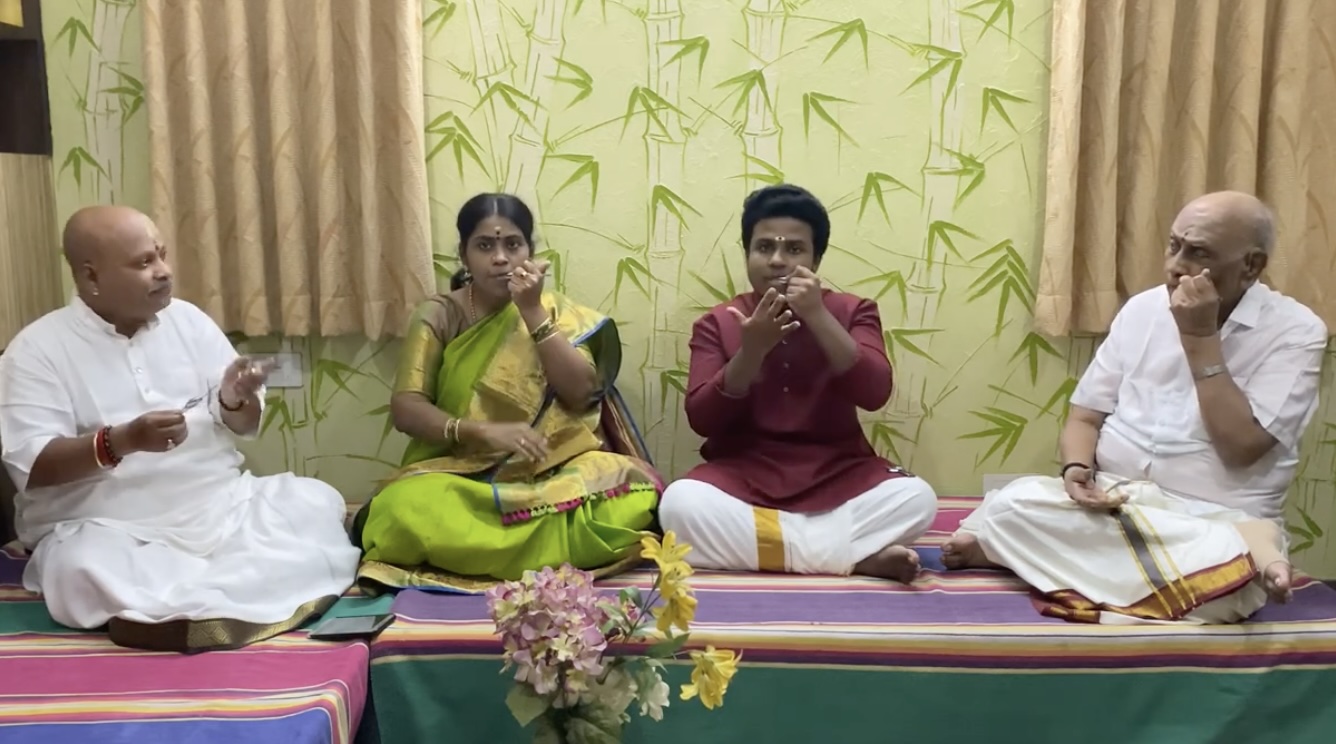
|
| 11:48 AM |
| Nathamuni Brothers Raghuvamsa Sudha - Kadanakuthuhalam Tyagaraja Madras 1974 Fire Museum 2007 Nathumuni Brothers were a Carnatic brass band, well known for their Clarinet Kutcheries. The lead clarinet is by Lakshmipathi Naidu. 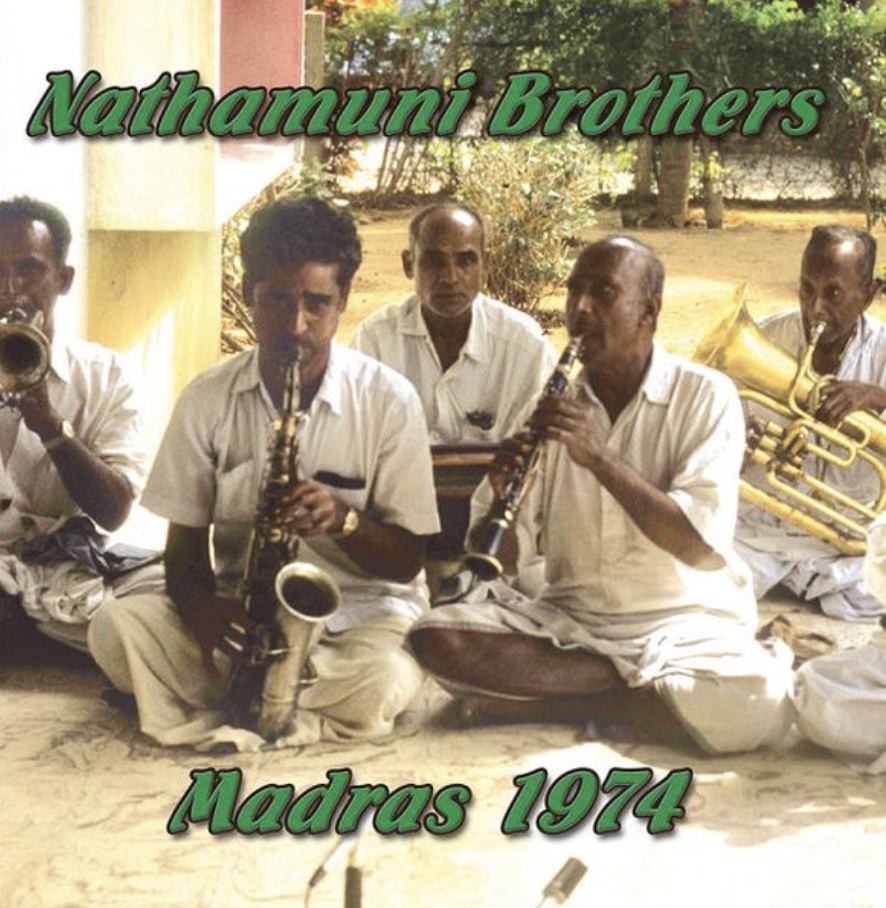
The Clarinet appeared on the subcontinent at around the same time as the violin. It was brought to India during the reign of King Sarabhoji II of Tanjavur. It was used as an accompaniment for the chinna melam (the lesser ensemble) which accompanied the dance performances of the Devadasis. |
| 11:54 AM |
| Madras String Quartet Palukavademira - Devamanohari Mysore Vasudevachar Resonance Oriental Records 2001 The Madras String Quartet (two violins, one viola, one cello) perform Carnatic kritis, arranged by violinist V. S. Narasimhan. 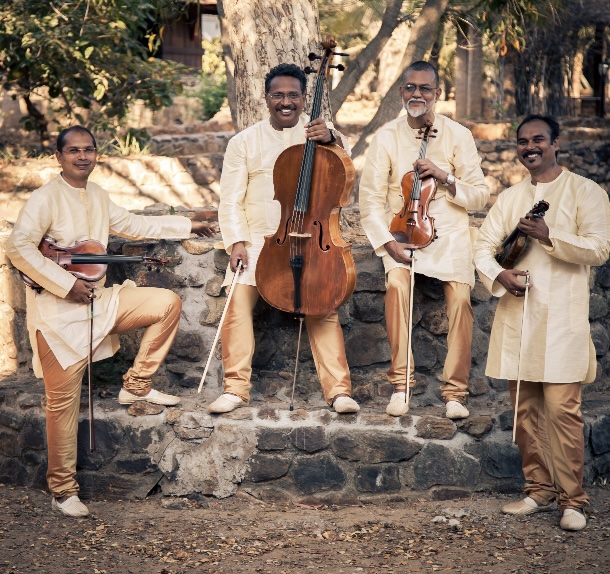
|